Children
Well-child visits: what happens at each age
Why there are so many visits in the first two years, what we are checking at each one, and what parents should bring.
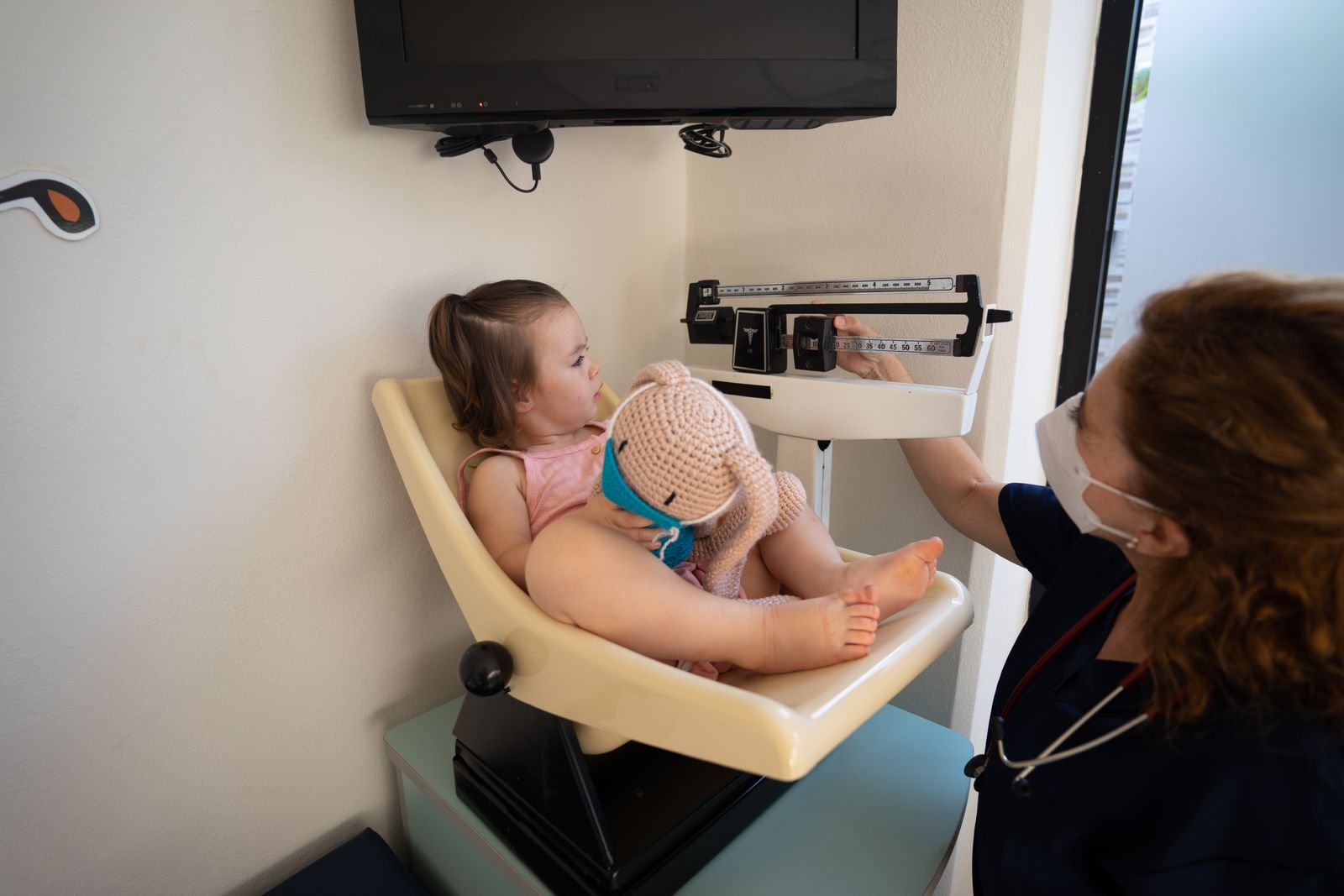
New parents are often surprised by how many appointments the first two years contain. There is a reason for the density: growth and development move fast at the start, and most of what we are watching for is easiest to address early.
After age two the schedule settles into one visit a year, and stays there through the teenage years.
The first month
We see babies within 48 hours of leaving the hospital, then again at two weeks and one month. These visits are mostly about weight, feeding and jaundice.
Weight is the honest measure of whether feeding is working. Most babies lose some weight in the first days and are back to birth weight by about two weeks. If they are not, we work out why, and that is a practical conversation about latch, supply, bottle volumes or reflux, not a verdict on anyone's parenting.
- Bring the hospital discharge paperwork to the first visit
- Note roughly how often the baby is feeding and how many wet nappies a day
- Write down your questions, because you will not remember them
- Bring the car seat question, the sleep question and the visitor question. Everyone has them.
Two months to eighteen months
Visits happen at two, four, six, nine, twelve, fifteen and eighteen months. Each one covers growth, feeding, sleep, safety and development, and most include immunizations.
Developmental checks are specific rather than general. At six months we are interested in rolling, babbling and reaching. At twelve we look at pulling to stand, pointing, responding to a name and a first word or two. At eighteen we use a formal autism screening questionnaire, which is routine for every child and not a sign of concern.
Ranges are wide. Plenty of children walk at nine months and plenty at fifteen, and both are normal. What we watch for is the loss of a skill a child previously had, which always deserves a proper look.
Two to five years
From age two the schedule is annual. Visits cover growth, blood pressure from age three, vision and hearing screening, speech, behaviour, sleep, dental health and school readiness.
This is also where the fussy eating conversation happens, usually more than once. The short version: your job is what is offered and when, their job is how much. Most toddlers who look like they eat nothing are growing perfectly well on the chart, which is the measure that counts.
Growth charts are more reassuring than anything a toddler does at the dinner table.
School age and adolescence
From five to eleven, visits cover growth, school, activity, screens, mood, and vaccination catch-up including HPV from age nine.
From about twelve, we spend part of the visit alone with the young person. Washington law gives adolescents confidentiality for certain topics, and the practical effect is that teenagers will say things without a parent in the room that they will not say with one. We explain the limits of that confidentiality to both of you at the start.
Adolescent visits also include depression and anxiety screening, sports clearance, and a conversation about sleep that almost always ends with a discussion about phones at night.
Between visits
Call whenever something worries you. There is no such thing as wasting our time with a question about a rash or a fever, and the parents who apologise for calling are almost always the ones who should have called sooner.
For anything urgent out of hours, use the nurse line. For difficulty breathing, a seizure, a baby under three months with a fever, or a child who cannot be roused, call 911.
This article is general information rather than advice about your child. Your provider is the right person for that.
This article is general health information written for a website demo. It is not medical advice and does not replace a conversation with your own provider. If this is an emergency, call 911.